Oem Orange And White Deco Mesh
Deco mesh is a polypropylene-based non-woven fabric engineered for decorative and protective applications. The orange and white variant uses co-extruded filaments where color is integrated during
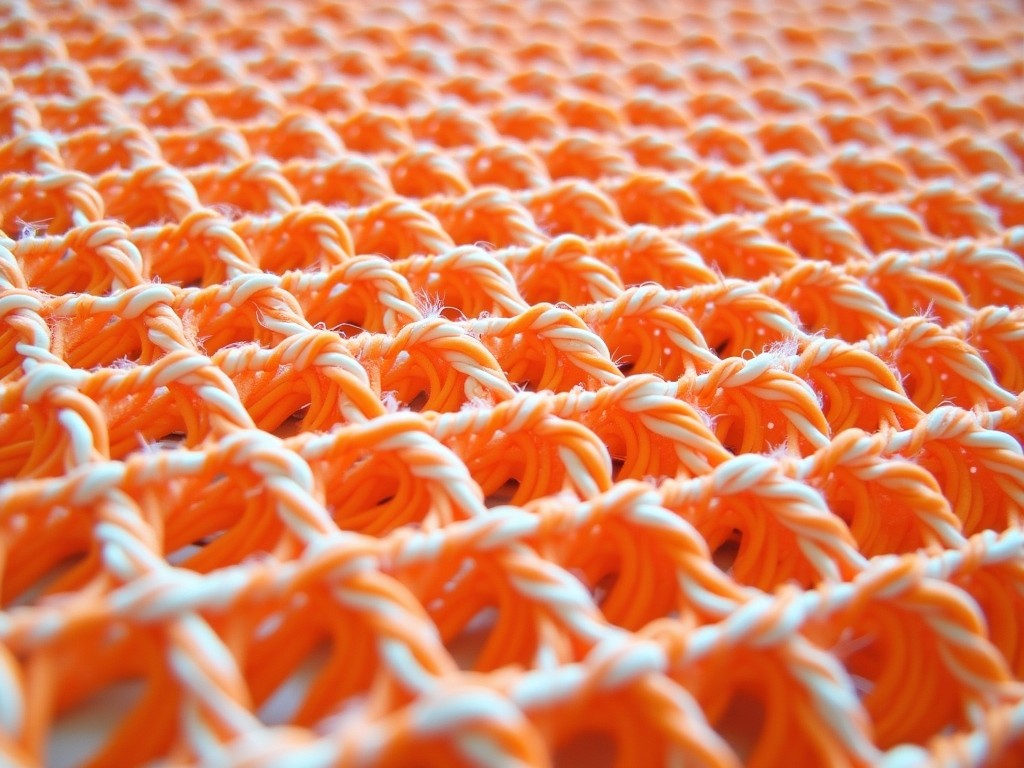
OEM Orange and White Deco Mesh
Material Composition and Structural Properties
Deco mesh is a polypropylene-based non-woven fabric engineered for decorative and protective applications. The orange and white variant uses co-extruded filaments where color is integrated during polymerization, ensuring UV-stable pigmentation that does not fade or bleed under prolonged outdoor exposure.
The base material has a tensile strength of approximately 35 MPa in the machine direction and 28 MPa in the cross direction, with elongation at break exceeding 150%. This provides resistance to tearing under dynamic loads while maintaining flexibility for conforming to irregular surfaces.
Density ranges from 60 to 90 gsm depending on application requirements, with porosity engineered to allow air and moisture transfer while blocking particulate debris larger than 2mm. The mesh structure consists of interlaced filaments forming uniform hexagonal apertures of 5mm ±0.5mm nominal size.
Color Stability and Environmental Resistance
The orange and white colors are achieved through masterbatch blending with titanium dioxide (white) and cadmium-free organic pigments (orange), both selected for resistance to UV degradation. Accelerated weathering testing per ASTM G154 shows less than 5% ΔE color shift after 1,000 hours of UV-B exposure at 0.89 W/m².
Chemical resistance includes tolerance to dilute acids, alkalis, and common industrial solvents. The material does not support mold or mildew growth and is inert in salt spray environments per ASTM B117 for up to 500 hours without visible degradation.
Operating temperature range spans from -30°C to +80°C. Below -30°C, embrittlement increases; above 80°C, gradual softening occurs without immediate loss of structural integrity. These limits are based on polymer glass transition and melting point characteristics of isotactic polypropylene.
Typical Industrial Applications
In construction safety, deco mesh is used as high-visibility barrier fencing around excavation zones, trenching operations, and temporary work areas. The orange/white combination meets OSHA 1926.200(b)(2) requirements for high-visibility safety apparel when used in personnel-facing applications, providing contrast against natural backgrounds and low-light conditions.
Agricultural applications include crop protection netting where the mesh deters avian pests while allowing pollinator access. The white side reflects sunlight to reduce canopy temperature, while the orange side provides visual deterrence. Installation tension is typically maintained at 15–25 N/cm to prevent sagging under wind load.
Event management utilizes this mesh for crowd control delineation and stage boundary marking. The color combination remains distinguishable under stage lighting and temporary illumination. Flame-retardant additives can be incorporated upon request to meet NFPA 701 standards for temporary structures.
Customization Options
Width is customizable from 0.5m to 3.0m in 50mm increments, constrained by loom width and handling logistics. Standard roll lengths are 50m, 100m, and 200m, though lengths up to 500m are feasible with spliceless winding techniques for automated deployment systems.
Aperture size can be adjusted between 3mm and 10mm by altering filament density and weave pattern. Smaller apertures increase filtration efficiency but reduce airflow; larger apertures improve visibility and wind pass-through. Custom patterns such as striped, checkerboard, or gradient transitions are achievable through programmed yarn feeding.
Additional treatments include anti-static coating (surface resistivity <10⁹ Ω/sq), flame retardancy (LOI ≥28%), and hydrophilic modification for improved wettability in dust suppression applications. All treatments are applied post-extrusion and do not alter base mechanical properties.
Quality Control and Testing
Incoming resin is tested for melt flow index (MFI 12±2 g/10min) and ash content to ensure batch consistency. During extrusion, filament diameter is monitored via laser gauging with feedback control to maintain ±3μm tolerance. Width and tension are regulated by dancer arms and load cells.
Finished rolls undergo 100% visual inspection for defects such as missing picks, discoloration, or foreign inclusions. Statistical sampling (per ANSI/ASQ Z1.4) verifies tensile strength, elongation, and colorfastness. Each batch includes a test certificate reporting average values and standard deviations for key parameters.
Packaging uses UV-stabilized polyethylene film with end labels indicating batch number, dimensions, material grade, and expiration date for UV stability (typically 24 months outdoor). Rolls are core-wound on 76mm ID cardboard or plastic cores with outer protection to prevent edge damage during transit.
Comparison: Standard vs. Custom Specifications
| Property | Standard Specification | Customizable Range |
|---|---|---|
| Width | 1.0m | 0.5m – 3.0m |
| Aperture Size | 5mm | 3mm – 10mm |
| Density | 75 gsm | 60 – 90 gsm |
| Roll Length | 100m | 50m – 500m |
| UV Stability | 1,000 hrs ASTM G154 | Up to 3,000 hrs with stabilizers |
Inquiry and Technical Support
To request a quotation or technical data sheet, provide the required width, length, aperture size, density, and any additional treatments (e.g., flame retardancy, anti-static). For integrated systems, specify mounting method, expected wind load, and duration of exposure to enable accurate material selection.
Samples are available upon request and typically ship within 3–5 business days. Lead time for standard orders is 10–15 days; custom configurations may extend to 20–25 days depending on tooling and material availability. All inquiries receive a response within one business day from an application engineer.
Contact our technical team to discuss your project requirements: Request Specification Review
More Products

Send Inquiry
If you are interested in our products, leave your information here and we will be in touch shortly.