6 Ft X 100 Ft Chicken Wire Fencing Roll
Chicken wire fencing, also known as poultry netting or hexagonal mesh, is a lightweight yet durable barrier solution fabricated from galvanized steel wire twisted into a continuous hexagonal pattern.
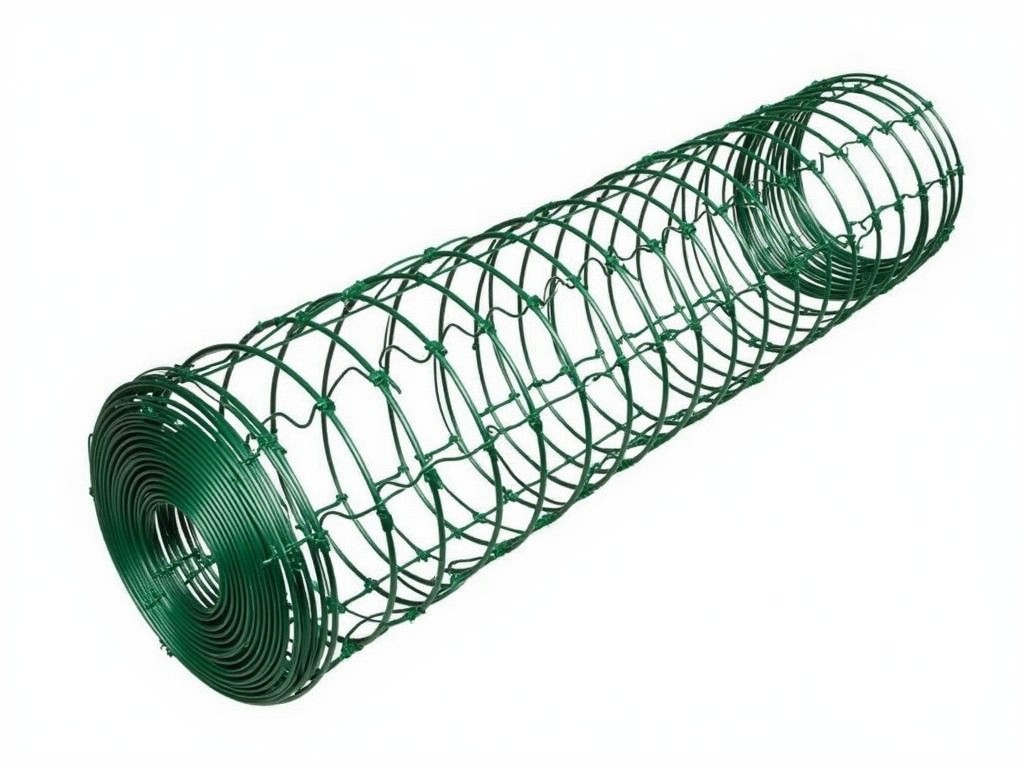
6 ft x 100 ft Chicken Wire Fencing Roll
Chicken wire fencing, also known as poultry netting or hexagonal mesh, is a lightweight yet durable barrier solution fabricated from galvanized steel wire twisted into a continuous hexagonal pattern. This specific roll measures 6 feet in height and 100 feet in length, providing 600 square feet of coverage per unit. The 6 ft height is standard for containing poultry, small livestock, and garden pests while allowing adequate visibility and airflow. The 100 ft length minimizes seams during installation, reducing potential weak points and labor time for large-area enclosures. Galvanization applies a zinc coating to the steel wire, forming a sacrificial layer that inhibits rust formation when exposed to moisture, soil, and atmospheric conditions.
The hexagonal mesh geometry distributes mechanical stress evenly across interconnected nodes, enhancing resistance to tearing under localized impact or animal pressure. Wire diameter and mesh opening size directly influence the fence’s structural integrity and suitability for specific applications. Common wire gauges for this dimension range from 20 AWG (0.81 mm) to 18 AWG (1.02 mm), with hexagonal openings typically sized at 1 inch or 2 inches across the flats. Smaller openings prevent ingress of smaller rodents and chicks, while larger openings reduce material weight and cost for applications where fine containment is unnecessary. The roll format allows for efficient transportation, storage, and field deployment using standard hand tools or powered fencing equipment.
Technical Specifications
| Parameter | Value | Notes | |||
|---|---|---|---|---|---|
| Roll Dimensions | 6 ft (height) x 100 ft (length) | Nominal; actual length may vary ±2% | |||
| Wire Material | Low-carbon steel | ASTM A641 compliant | |||
| Coating Type | Hot-dip galvanized | Minimum zinc coating: 40 g/m² | Wire Gauge Options | 18 AWG (1.02 mm) or 20 AWG (0.81 mm) | Custom gauges available upon request |
| Mesh Opening | 1 inch or 2 inch hexagonal | Measured across flats; custom sizes possible | |||
| Tensile Strength (Wire) | 55,000 – 70,000 psi | Dependent on wire temper and coating process | |||
| Roll Weight (Approx.) | 25–35 lbs | Varies with wire gauge and mesh size | |||
| UV Stability | Inherent; galvanization provides baseline protection | Additional polymer coatings available for extended life |
Material Selection and Corrosion Resistance
The base material is low-carbon steel wire selected for its formability during the weaving process and sufficient tensile strength to withstand handling and moderate loads. Hot-dip galvanizing immerses the wire in molten zinc (approximately 450°C), forming a metallurgical bond where zinc-iron alloy layers develop at the interface, topped by a pure zinc surface. This coating provides cathodic protection; if the coating is scratched, zinc corrodes preferentially to protect the exposed steel. The minimum coating weight of 40 g/m² (equivalent to ~2.8 mils thickness) meets general agricultural standards for environments with moderate humidity and occasional wetting.
In highly corrosive environments—such as coastal areas with salt spray, acidic soils, or prolonged exposure to manure chemicals—standard hot-dip galvanization may exhibit reduced lifespan. For these conditions, galvanized wire can be further treated with a polymer coating (e.g., PVC or PE) applied via extrusion, creating a barrier that isolates the metal from electrolytes. Alternatively, stainless steel wire (grades 304 or 316) offers intrinsic corrosion resistance but at significantly higher cost and reduced flexibility during installation. The choice between galvanized, polymer-coated, or stainless steel variants depends on the expected service life, maintenance accessibility, and total cost of ownership for the specific installation site.
Applications in Agricultural and Industrial Settings
The 6 ft height is effective for containing adult poultry such as chickens, ducks, and geese, preventing escape while deterring most terrestrial predators like foxes and raccoons when installed with proper ground burial or apron fencing. In horticulture, this fencing excludes rabbits, groundhogs, and deer from vegetable plots and orchards; the hexagonal mesh allows beneficial insects and pollinators to pass through while blocking larger herbivores. Its use extends to temporary livestock partitioning during rotational grazing, protecting young tree saplings from bark stripping, and securing compost bins against rodent intrusion.
Industrial applications include safety barriers around machinery with low-risk moving parts, containment of lightweight bulk materials in storage yards, and windbreaks for dust control in non-hazardous zones. The open mesh design minimizes wind load compared to solid panels, reducing stress on support posts. In aquaculture, it serves as a predator exclusion barrier around outdoor raceways or ponds when installed above the waterline. The roll format simplifies deployment for temporary fencing needs at construction sites, event venues, or agricultural fairs where rapid installation and removal are required.
Installation Considerations
Proper installation begins with setting support posts at intervals of 8–10 feet for light-duty poultry containment; closer spacing (6–8 feet) is recommended for areas with higher animal pressure or wind exposure. Posts can be wood (pressure-treated), metal (T-posts or U-posts), or composite, depending on durability requirements and soil conditions. The fencing roll is attached to posts using galvanized staples, zip ties, or wire clips, ensuring the mesh remains taut without over-tensioning, which could cause wire fatigue at attachment points. A minimum 6-inch ground burial or L-shaped apron bent outward at the base prevents digging predators from undermining the fence.
When joining multiple rolls, overlap the ends by at least 6 inches and secure with wire ties or hog rings every 4–6 inches along the seam to maintain structural continuity. For gates, construct a rigid frame using wood or metal and attach the fencing to the frame with consistent tension. Avoid sharp bends or kinks during handling, as these create stress concentrators that can lead to premature wire breakage. Tools required include wire cutters, gloves, a measuring tape, and a staple gun or hammer; powered fencing stretchers can improve efficiency for long runs but are not mandatory for manual installation.
Customization Options
While the 6 ft x 100 ft roll is a standard offering, dimensions can be adjusted to match project-specific requirements. Height customization is feasible from 3 ft to 10 ft in incremental steps, constrained only by the maximum width of the weaving machinery. Length adjustments affect roll weight and handling; lengths beyond 150 ft may require specialized handling equipment due to increased roll diameter and weight. Wire gauge can be selected from 16 AWG (1.29 mm) for heavier-duty needs down to 22 AWG (0.64 mm) for temporary or low-stress applications, with corresponding changes in roll weight and flexibility.
Mesh opening size ranges from 0.5 inch to 3 inch hexagonal, allowing fine-tuning for pest exclusion versus material cost. Coating options include standard hot-dip galvanizing, galvanized with PVC coating (available in green, black, or brown for visual blending), or galvanized with PE coating. Custom formulations for UV stabilizers or antimicrobial additives in the polymer layer are available upon request. Packaging can be modified for bulk orders—rolls may be banded individually, stacked on pallets with corner protectors, or placed in moisture-resistant bags for extended outdoor storage. All customizations are subject to minimum order quantities and lead time adjustments based on material availability and production scheduling.
Quality Control and Testing
Quality assurance begins with incoming wire inspection, verifying diameter, tensile strength, elongation, and coating weight via magnetic induction or gravimetric methods. During weaving, machines monitor tension and pitch consistency to ensure uniform hexagonal geometry; deviations beyond ±5% in opening size trigger automatic alerts. Finished rolls undergo visual inspection for coating continuity, uncoated spots, or wire breaks under bright lighting. A sample from each production batch is subjected to a salt spray test (ASTM B117) for 240 hours to evaluate coating adhesion and corrosion resistance; acceptable results show no more than 5% red rust on the surface.
Roll length is validated using a calibrated measuring device under controlled tension to prevent elongation errors. Weight checks confirm material usage aligns with specifications; significant deviations prompt investigation into wire density or coating irregularities. Packaging integrity is assessed by simulating handling stresses—drops, vibrations, and stacking loads—to ensure the roll remains undeformed and protected during transit. Documentation includes material test reports, coating certificates, and dimensional conformance records, available to customers upon request. These procedures ensure that each roll meets the performance expectations for its intended environmental and mechanical demands.
Packaging and Logistics
Each 6 ft x 100 ft roll is wound tightly onto a biodegradable paper core or a reusable plastic spool to prevent unwinding during handling. The roll is then wrapped in UV-stabilized polyethylene film with a minimum thickness of 4 mils, providing a moisture barrier and protection against abrasion during transit. For palletized shipments, rolls are arranged vertically or horizontally depending on warehouse constraints, secured with polypropylene straps, and protected by corner boards to prevent edge damage. Standard pallet configuration holds 24–30 rolls, depending on roll weight and pallet rating, optimizing truckload efficiency.
Shipping is typically via LTL (less-than-truckload) for smaller quantities or full truckload for bulk orders. The compact roll geometry allows efficient stacking in containers and trailers, minimizing wasted space. Export shipments comply with ISPM 15 standards for wood packaging materials if applicable, and all necessary documentation (commercial invoice, packing list, certificate of origin) is prepared in advance. Storage recommendations advise keeping rolls in a cool, dry place away from direct sunlight and chemicals; prolonged exposure to UV radiation can degrade any polymer coatings over time, though the galvanized steel core remains unaffected. Proper storage preserves product integrity until installation.
Comparison with Alternative Fencing Solutions
| Feature | Chicken Wire (6 ft x 100 ft) | Welded Wire Mesh | Plastic Poultry Netting |
|---|---|---|---|
| Material | Galvanized steel | Galvanized steel | Polypropylene |
| Typical Wire Gauge | 18–20 AWG | 16–20 AWG | 0.8–1.2 mm dia. |
| Mesh Opening | 1–2 inch hex | 1–2 inch square | 1–2 inch square |
| Tensile Strength (Material) | 55,000–70,000 psi | 55,000–70,000 psi | 6,000–8,000 psi |
| Corrosion Resistance | Good (galvanized) | Good (galvanized) | Excellent (inherent) |
| UV Resistance | Moderate (coating dependent) | Moderate (coating dependent) | Good (with stabilizers) |
| Installation Ease | High (lightweight, flexible) | Moderate (stiffer, requires tools) | Very High (very lightweight) |
| Typical Use Case | Poultry, garden, temporary | Livestock, security, permanent | Temporary poultry, lightweight |
| Cost (Relative) | Low | Medium | Low-Medium |
The 6 ft x 100 ft chicken wire fencing roll offers a balance of affordability, flexibility, and adequate strength for containment and exclusion applications where extreme loads or permanent structural integrity are not primary requirements. Compared to welded wire mesh, it is lighter and easier to manipulate by hand, reducing installation time and labor costs, though welded mesh provides superior resistance to sagging and impact over long spans. Plastic poultry netting excels in corrosion resistance and weight but lacks the durability for prolonged animal contact or high-tension scenarios. The choice depends on the specific mechanical demands, environmental exposure, expected service life, and budget constraints of the project.
More Products

Send Inquiry
If you are interested in our products, leave your information here and we will be in touch shortly.